
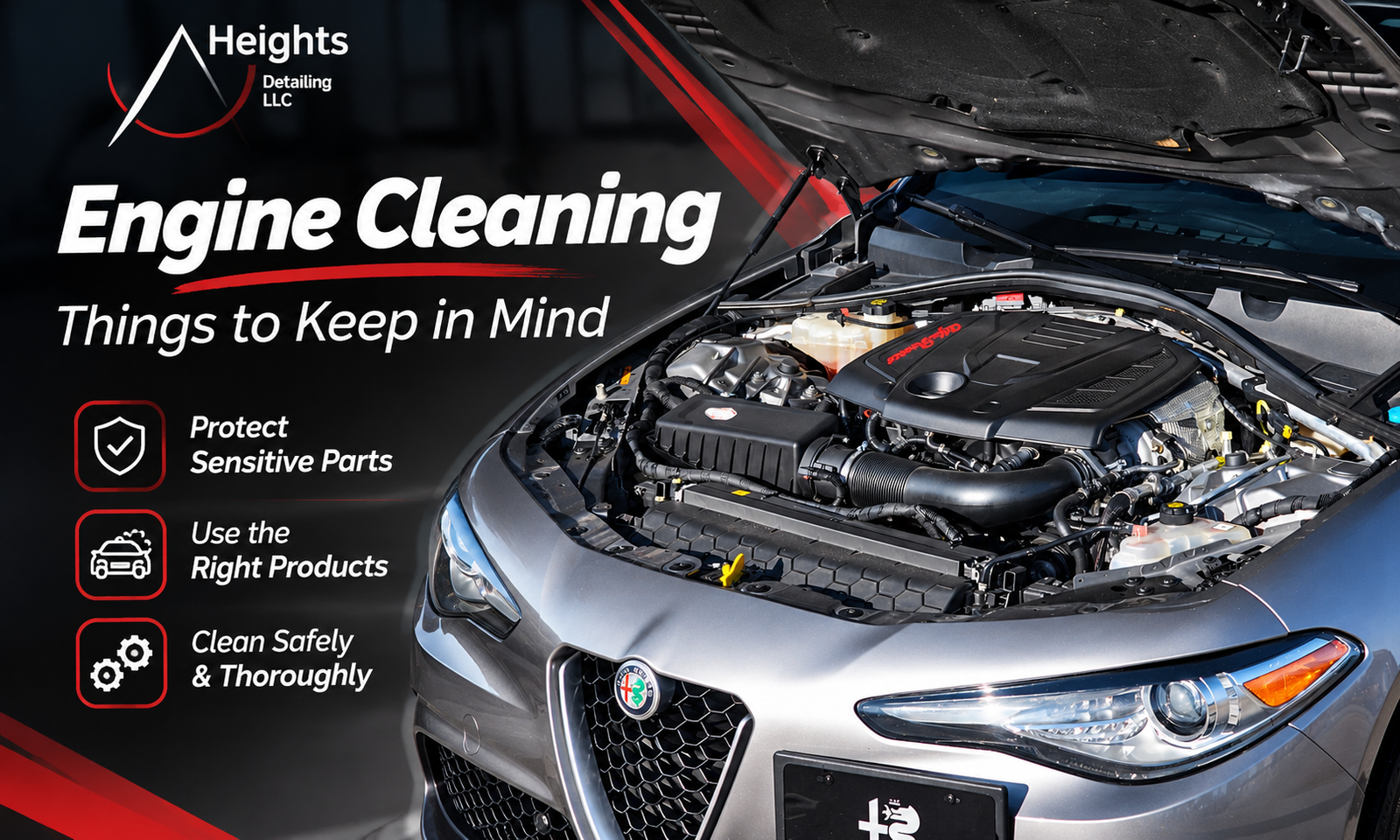
Your vehicle’s engine bay is one of the most overlooked areas when it comes to regular car maintenance and detailing. While most vehicle owners focus on washing the exterior, cleaning the interior, and protecting the paint, the engine compartment often collects dust, grease, oil residue, leaves, and road grime over time.
A clean engine bay can make your vehicle look better, simplify visual inspections, and help you spot leaks or damaged components more easily. However, engine cleaning requires extra care because modern vehicles contain electrical connections, sensors, wiring, and other sensitive components.
Whether you’re considering cleaning your engine bay at home or hiring a professional detailer, understanding the right precautions can help you avoid unnecessary damage.
Why Is Engine Bay Cleaning Important?
Your engine bay is constantly exposed to dust, dirt, moisture, road debris, and other contaminants. Over time, these materials can accumulate around engine covers, hoses, plastic components, and other accessible surfaces.
Regular engine bay cleaning offers several benefits.
1. Keeps Your Engine Compartment Looking Clean
A clean engine bay gives your vehicle a more maintained appearance. This is especially important for luxury vehicles, enthusiast cars, and vehicles being prepared for sale.
Removing accumulated dirt and grease helps restore the appearance of plastic covers, hoses, and other visible components.
2. Makes Visual Inspections Easier
When an engine compartment is covered in dirt and grease, identifying certain problems can become more difficult.
Cleaning accessible surfaces can make it easier to notice:
- Fresh oil or fluid leaks.
- Cracked or deteriorating hoses.
- Loose connections.
- Damaged plastic components.
- Accumulated debris around the engine.
Remember that cleaning does not repair mechanical problems, but it can make visual inspections easier.
3. Helps Maintain Your Vehicle’s Appearance and Resale Presentation
A clean engine bay can contribute to the overall presentation of a well-maintained vehicle.
If you’re preparing your car for resale, professional engine bay detailing can help create a better impression when potential buyers inspect the vehicle.
8 Important Things to Keep in Mind When Cleaning Your Car’s Engine
Engine bay cleaning is not the same as washing your vehicle’s exterior. You need to pay attention to the products, equipment, water pressure, and cleaning techniques you use.
Here are eight important precautions to follow.
1. Always Let the Engine Cool Down First
One of the most important rules of engine cleaning is never to start washing a hot engine.
After driving, engine components such as the exhaust manifold, radiator, and other metal surfaces can become extremely hot.
Applying cold water or cleaning products to hot components can cause rapid temperature changes and potentially damage certain materials. Hot surfaces can also cause cleaning products to dry too quickly, leaving unwanted residue.
What should you do?
- Turn off the engine and allow it to cool completely.
- Open the hood to help heat escape.
- Check that accessible surfaces are no longer hot before beginning.
- Avoid cleaning immediately after a long drive.
A completely cool engine provides a safer starting point for the detailing process.
2. Protect Electrical Components and Sensitive Connections
Modern vehicles contain numerous electrical components that require careful handling during engine bay cleaning.
Although many engine compartments are designed to withstand normal exposure to rain and road moisture, that does not mean every electrical component should be directly exposed to water.
Pay particular attention to:
- Alternator and exposed electrical connections.
- Battery terminals.
- Fuse boxes.
- Engine control modules.
- Ignition components and exposed connectors.
- Aftermarket electrical equipment.
What should you do?
Identify sensitive components before applying any cleaning solution. Protect exposed areas where necessary, following the vehicle manufacturer’s recommendations.
Avoid directing water toward electrical connections, sensors, and exposed wiring.
If you’re unfamiliar with your vehicle’s engine layout, professional cleaning is a safer choice than experimenting with water and cleaning products.
3. Avoid Using High-Pressure Water Directly on the Engine
Using a pressure washer may seem like an easy way to remove stubborn dirt, but excessive water pressure can create unnecessary risks.
High-pressure water can force moisture into electrical connectors, seals, air intake areas, and other sensitive locations.
It can also disturb loose wiring or damage delicate components.
A safer approach includes:
- Using a controlled, low-pressure water source when rinsing is appropriate.
- Keeping the spray away from sensitive electrical connections.
- Avoiding direct spraying into air intakes.
- Using microfiber towels and detailing brushes for accessible areas.
Remember, the goal is to remove dirt and grease without forcing water into places where it does not belong.
4. Choose the Right Engine Degreaser and Cleaning Products
Not every household cleaning product is suitable for automotive engine cleaning.
Some aggressive chemicals can discolor plastic, damage rubber, affect protective coatings, or cause corrosion on certain materials.
Using the wrong product can create more problems than the dirt you’re trying to remove.
Before applying a cleaning product, consider the following:
- Choose a degreaser specifically formulated for automotive engine bay cleaning.
- Check whether it is compatible with plastic, rubber, and metal surfaces.
- Follow the manufacturer’s dilution and application instructions.
- Avoid applying strong chemicals to sensitive electrical components.
- Never mix different cleaning chemicals.
A professional detailer understands which products are appropriate for different engine bay materials and how to apply them safely.
5. Use Soft Detailing Brushes Instead of Abrasive Tools
Some areas of the engine compartment can collect stubborn grease and dirt that cannot be removed with a simple wipe.
However, using rough brushes, metal tools, or abrasive materials can scratch plastic covers and damage delicate surfaces.
Instead, use detailing brushes designed for automotive cleaning.
Recommended cleaning tools include:
- Soft detailing brushes for delicate areas.
- Medium-bristle brushes for suitable durable surfaces.
- Microfiber towels for wiping accessible components.
- Small detailing brushes for tight spaces.
- Appropriate automotive degreasers.
Work gently around wiring, hoses, connectors, and plastic covers. Never pull or aggressively scrub components that appear loose or fragile.
6. Keep Water Away From Air Intakes, Belts, and Moving Components
Another important consideration is knowing which areas should never receive direct water or cleaning product application.
Air intake systems, exposed filters, electrical connections, and certain moving components require special attention.
Water entering an air intake can cause serious engine problems. Cleaning chemicals or oily dressings on belts and pulleys can also affect their operation.
Areas requiring extra care include:
- Air intake openings and exposed air filters.
- Drive belts and pulleys.
- Electrical connectors.
- Cooling fans.
- Exposed wiring and sensors.
Never apply greasy dressing to moving mechanical components. Keep the engine switched off throughout the cleaning process and allow all products to be removed and surfaces dried properly.
7. Dry the Engine Bay Thoroughly After Cleaning
Cleaning is only part of the process. Proper drying is equally important.
Water left sitting in crevices, around electrical connections, or in hard-to-reach areas can create unwanted problems.
After cleaning, use appropriate drying methods to remove remaining moisture.
Follow these precautions:
- Use clean microfiber towels to dry accessible surfaces.
- Use controlled compressed air where appropriate to remove trapped water.
- Check around connectors and recessed areas for remaining moisture.
- Make sure protective coverings are removed.
- Inspect the engine bay before restarting the vehicle.
Never restart the vehicle if you suspect water has entered an electrical component or air intake. Have the affected area inspected first.
8. Apply Appropriate Protection to Plastic and Rubber Components
After cleaning and drying, the final step is improving the appearance of suitable plastic and rubber surfaces.
Engine bay detailing products can help restore a clean, consistent finish to faded plastic covers and trim.
When selecting a dressing or protectant:
- Choose products designed for automotive engine bay materials.
- Follow the manufacturer’s application instructions.
- Avoid greasy products that attract dust.
- Keep dressings away from belts, pulleys, brakes, and other moving or friction-dependent components.
- Remove excess product to prevent residue buildup.
A properly finished engine bay should look clean and natural rather than excessively oily or shiny.
DIY Engine Cleaning vs. Professional Engine Bay Detailing
Many vehicle owners consider cleaning their engine bay themselves. While light maintenance cleaning may be manageable, professional detailing offers additional experience with different engine layouts, materials, and cleaning requirements.
Here’s a comparison:
| Feature | DIY Engine Cleaning | Professional Engine Detailing |
|---|---|---|
| Equipment | Basic household or detailing tools | Professional detailing equipment |
| Product selection | Depends on owner knowledge | Products selected for specific surfaces |
| Electrical precautions | Requires personal knowledge | Experienced assessment and protection |
| Cleaning results | Depends on technique | Detailed cleaning of accessible areas |
| Finishing | May leave uneven residue | Professional plastic and trim dressing |
If you’re unfamiliar with the components under your hood, professional engine bay detailing is worth considering.
How Often Should You Clean Your Car’s Engine Bay?
There is no single cleaning schedule that works for every vehicle. The ideal frequency depends on driving conditions, vehicle age, environment, and how quickly dirt accumulates.
Here are some general guidelines:
- Daily drivers: Inspect periodically and clean when noticeable dirt accumulates.
- Vehicles driven on dusty roads: May require more frequent attention.
- Luxury and collector vehicles: Benefit from careful, condition-based maintenance.
- Vehicles being prepared for sale: Consider professional engine bay detailing as part of the overall presentation.
Avoid unnecessary frequent wet cleaning. Regular inspections and gentle maintenance are often better than repeatedly exposing the engine compartment to water and chemicals.
Common Engine Cleaning Mistakes You Should Avoid
Even a small mistake during engine cleaning can create unnecessary complications.
Here are some mistakes to avoid:
- Cleaning the engine while it is still hot.
- Spraying water directly onto electrical connections.
- Using excessive pressure to remove stubborn grease.
- Applying household chemicals without checking compatibility.
- Using abrasive brushes on delicate surfaces.
- Allowing water to enter the air intake.
- Applying oily dressing to belts and moving components.
- Restarting the vehicle without checking for trapped moisture.
- Ignoring damaged wiring, loose hoses, or existing fluid leaks.
The safest approach is to understand your vehicle’s layout and use appropriate cleaning methods rather than rushing through the process.
Why Choose Professional Engine Bay Detailing at Heights Detailing?
Keeping your engine bay clean requires more than simply spraying water and wiping away dirt. It takes the right products, equipment, and attention to detail to achieve a clean finish while protecting sensitive components.
At Heights Detailing, we offer professional Engine Bay Detail services in Aurora, Colorado, designed to improve the appearance of your vehicle’s engine compartment.
Our Engine Bay Detail service includes:
- Safe degreasing and cleaning.
- Careful cleaning of accessible engine bay surfaces.
- Plastic and trim dressing.
- Improved overall engine compartment appearance.
Our engine bay detailing service starts at $75, depending on the vehicle and its condition.
Whether you drive a daily commuter, a luxury vehicle, or a collector car, our goal is to provide careful automotive detailing that helps maintain your vehicle’s appearance.
Ready to give your engine bay a cleaner appearance?
Contact Heights Detailing to schedule your professional engine bay detail in Aurora, CO.
Website: https://heightsdetailing.com/
Phone: (303) 335-9147
Email: heightsdetailing@gmail.com
Address: 21487 E Stanford Dr, Aurora, CO 80015
Frequently Asked Questions About Engine Cleaning
1. Is it safe to wash a car engine with water?
Engine bay cleaning can be performed safely on many modern vehicles when appropriate precautions are followed. However, sensitive electrical connections, exposed air intakes, and other vulnerable components must be protected. Always follow the vehicle manufacturer’s recommendations.
2. Can I clean my engine bay with a pressure washer?
High-pressure water is not recommended around sensitive engine components. It can force moisture into electrical connections, seals, and air intake areas. A controlled, low-pressure cleaning method is generally safer.
3. Should I clean my engine while it is hot or cold?
Always allow the engine to cool completely before cleaning. Applying cold water or chemicals to hot engine components can create unnecessary risks and cause cleaning products to dry too quickly.
4. What is the best product for cleaning an engine bay?
Use an automotive degreaser formulated for engine bay surfaces. Check the manufacturer’s instructions to ensure the product is compatible with the materials you’re cleaning, including plastic, rubber, and metal.
5. Does engine bay cleaning improve engine performance?
Engine bay cleaning primarily improves appearance and makes visual inspections easier. It does not automatically improve horsepower, fuel economy, or mechanical performance.
6. How much does professional engine bay detailing cost?
The price depends on the vehicle’s size, condition, and the level of cleaning required. At Heights Detailing, Engine Bay Detail starts at $75.
7. Can engine cleaning help identify oil leaks?
Yes. Removing accumulated dirt and grease can make fresh oil or fluid leaks easier to notice during a visual inspection. However, cleaning alone cannot diagnose or repair mechanical problems.
8. Should I apply dressing after cleaning my engine bay?
A suitable automotive protectant can improve the appearance of compatible plastic and rubber trim. However, it should never be applied to belts, pulleys, or other moving mechanical components.
9. Can I clean my engine bay myself?
You can perform light cleaning if you understand your vehicle’s engine layout and follow the manufacturer’s recommendations. If you’re unsure about protecting electrical components or using the right cleaning products, consider professional engine bay detailing.