Every time you drive, your vehicle’s paint faces potential damage from flying rocks, road debris, bug splatter, and everyday wear. Even careful drivers can discover small paint chips or scratches that affect their car’s appearance.
That’s where paint protection film (PPF) can make a difference.
PPF is a transparent protective film applied to your vehicle’s exterior surfaces. It helps absorb minor impacts and reduces the risk of rock chips, scratches, and surface abrasions.
But does every part of your car need PPF?
Not necessarily. Certain areas experience significantly more exposure than others.
In this guide, we’ll explain which parts of your car need paint protection film the most, why those areas matter, and how to choose the right coverage for your vehicle.
What Is Paint Protection Film, and How Does It Work?
Paint protection film, also called PPF or clear bra, is a durable, transparent film designed to protect automotive paint from common physical damage.
When professionally installed, the film creates a protective barrier between your vehicle’s painted surface and everyday road hazards.
Key Benefits of Paint Protection Film
- Helps prevent rock chips and minor scratches
- Protects paint from road debris and surface abrasions
- Helps preserve the vehicle’s original paint finish
- Provides additional protection against bug splatter and environmental contaminants
- Offers nearly invisible protection with clear-film options
- May feature self-healing technology that reduces certain light surface marks with warmth
Unlike ceramic coating, which primarily helps with water repellency, gloss, and cleaning, PPF is specifically designed to resist minor physical impacts.
However, paint protection film cannot prevent every scratch, chip, or type of damage.
Which Car Parts Need Paint Protection Film the Most?
Not all exterior surfaces experience the same level of exposure.
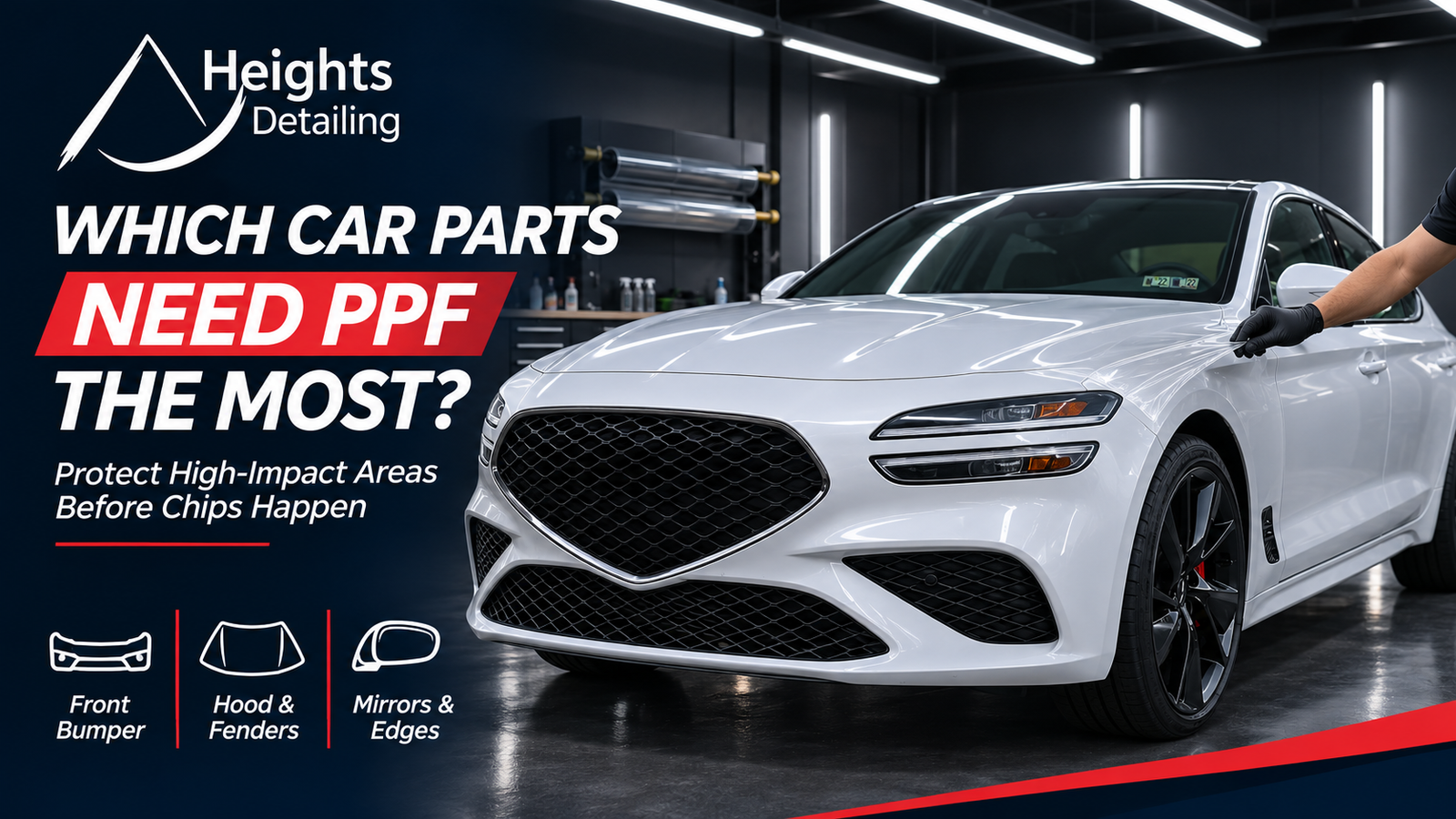
The front of your vehicle typically receives the most direct contact with airborne debris, while lower panels and high-contact areas face additional risks.
Here’s a quick comparison.
| Vehicle Area | Main Exposure | Protection Priority | Recommended PPF Coverage |
|---|---|---|---|
| Front bumper | Rock chips, road debris, insects | Very High | Front-end protection |
| Hood | Flying stones and highway debris | Very High | Full hood |
| Front fenders | Road debris and surface abrasions | High | Full front coverage |
| Side mirrors | Flying debris and minor scratches | High | Mirror coverage |
| Rocker panels | Gravel, dirt, and tire-thrown debris | High | Lower-body protection |
| Door edges | Contact with nearby objects | Medium | Door-edge protection |
| Door handle cups | Fingernail and everyday contact marks | Medium | Targeted protection |
| Rear bumper loading area | Cargo-related scratches and scuffs | Medium | Rear bumper protection |
The best coverage depends on your vehicle’s design, driving habits, and the areas you want to protect.
1. Front Bumper: One of the Most Important Areas for PPF
The front bumper is one of the most vulnerable parts of any vehicle.
As you drive, it faces direct exposure to rocks, loose gravel, insects, and other debris coming from the road.
Why Front Bumper PPF Matters
Your front bumper is especially exposed during:
- Highway driving
- Following other vehicles
- Driving on gravel-covered roads
- Winter travel on treated roads
- Daily commuting
Over time, repeated impacts can leave small chips and marks in the painted surface.
Installing paint protection film on the front bumper helps reduce this type of damage while maintaining the bumper’s original appearance.
For drivers who want to protect only the most exposed areas, the front bumper is often a practical starting point.
2. Hood: Protect Against Rock Chips and Road Debris
Your hood covers a large painted area and is frequently exposed to airborne debris.
Small stones can strike its leading edge or travel farther across the surface, depending on road conditions and vehicle design.
Full Hood PPF vs. Partial Hood PPF
Partial hood coverage protects a selected front section of the hood.
Full hood coverage extends protection across the entire hood.
Although partial coverage can address a common impact zone, full hood PPF provides more complete protection and avoids a film edge across the middle of the panel.
For vehicle owners who regularly drive on highways, full hood protection is worth considering.
3. Front Fenders: Important Protection for High-Impact Areas
The front fenders are another common target for road debris.
Their position near the front wheels and bumper makes them vulnerable to chips, scratches, and minor abrasions.
Paint protection film on the front fenders can help:
- Reduce rock-chip damage
- Protect vulnerable painted surfaces
- Maintain a consistent exterior appearance
- Complement hood and bumper coverage
When combined with front bumper and hood protection, fender coverage forms part of a comprehensive full-front PPF package.
4. Side Mirrors: Small Areas With High Exposure
Side mirrors may be smaller than other exterior components, but they face considerable exposure during everyday driving.
Road debris can strike mirror housings, especially at highway speeds.
Because mirrors often have painted covers, visible chips can affect their overall appearance.
PPF helps protect these exposed surfaces while remaining nearly invisible when properly installed.
Side mirror protection is frequently included in full-front coverage packages.
5. Rocker Panels: Protect Against Gravel and Road Contaminants
Rocker panels run along the lower sides of your vehicle, beneath the doors.
These areas are particularly vulnerable because tires can throw gravel, dirt, and other debris against them.
For drivers in Aurora and the surrounding Denver area, winter road treatment materials and changing road conditions can increase exposure to abrasive debris.
Why Rocker Panel Protection Is Worth Considering
- Helps reduce chips from tire-thrown gravel
- Protects lower painted surfaces from minor abrasions
- Adds protection to an area that is difficult to keep clean
- Complements front-end paint protection
Rocker panel PPF may be especially useful for SUVs, trucks, and vehicles driven regularly on roads with loose debris.
6. Door Edges and Door Handle Areas: Prevent Everyday Wear
Not all paint damage happens on the road.
Some of the most common scratches occur during everyday activities such as opening doors and entering the vehicle.
Door Edge Protection
Door edges can develop chips when they accidentally contact garage walls, posts, or nearby objects.
A narrow strip of PPF can help protect the painted edge from minor contact damage.
Door Handle Cup Protection
The recessed areas behind door handles may develop fine scratches from fingernails, keys, or other everyday contact.
Targeted PPF installation can help reduce these marks.
These small protection areas can be useful additions to a larger PPF package.
7. Rear Bumper: Protect Against Loading and Unloading Scratches
The upper surface of the rear bumper can experience frequent contact when loading or unloading the trunk.
Groceries, luggage, sports equipment, and other items may accidentally scrape against painted surfaces.
Paint protection film on the rear bumper’s loading area helps reduce minor scratches and scuffs.
This coverage is particularly practical for:
- Family SUVs
- Daily-use vehicles
- Vehicles used for frequent travel
- Owners who regularly transport equipment
Full Front PPF vs. Full Body PPF: Which Should You Choose?
The right paint protection film package depends on how much of your vehicle you want to protect.
Full Front Paint Protection Film
Full-front coverage commonly includes the front bumper, hood, front fenders, and side mirrors, although exact packages vary by installer.
It focuses on areas that receive the most direct exposure to flying road debris.
Full Body Paint Protection Film
Full-body PPF extends coverage across most or all applicable painted exterior panels.
This provides more extensive protection against minor scratches, abrasions, and road hazards.
Here’s how the options compare.
| Feature | Full Front PPF | Full Body PPF |
|---|---|---|
| Front bumper protection | Yes | Yes |
| Hood protection | Yes | Yes |
| Front fender protection | Yes | Yes |
| Side mirror protection | Usually included | Usually included |
| Door and side panel protection | Generally not included | Included |
| Rear painted panel protection | Generally not included | Included |
| Overall coverage | Concentrated on front impact areas | More extensive exterior coverage |
| Best suited for | Daily drivers and highway commuters | Owners seeking broad paint protection |
Package inclusions should always be confirmed with your installer.
What Areas Need the Most PPF Protection in Colorado?
Colorado drivers encounter conditions that can make paint protection particularly valuable.
In Aurora and nearby communities, everyday travel may expose vehicles to:
- Loose gravel and small stones
- Highway debris
- Winter road treatment materials
- Dirt and grit from changing weather conditions
- Road construction debris
Recommended Priority for Colorado Drivers
If you’re deciding where to install PPF first, consider this order:
- Front bumper
- Full hood
- Front fenders
- Side mirrors
- Rocker panels
- Door edges and handle cups
- Rear bumper loading area
This order is a general guideline. A vehicle with wide rear fenders or an unusual body design may benefit from additional protection in different locations.
Is Paint Protection Film Worth It for Daily Drivers?
Paint protection film isn’t limited to luxury or high-performance vehicles.
Daily commuters can benefit because regular driving creates repeated opportunities for small rocks and debris to contact the paint.
PPF may be worth considering if you:
- Frequently drive on highways
- Want to preserve your factory paint
- Own a new or recently repainted vehicle
- Plan to keep your vehicle for several years
- Want to reduce the risk of minor paint damage
- Prefer a nearly invisible form of exterior protection
While PPF can help reduce physical damage, regular washing and proper maintenance are still important.
How to Choose the Right Paint Protection Film Coverage
Before installing PPF, think about where and how you drive.
Consider Your Driving Habits
Highway commuters may benefit most from front-end coverage.
Drivers who regularly encounter gravel or rough roads may want additional rocker panel and lower-body protection.
Evaluate Your Vehicle’s Condition
Paint protection film should be installed on appropriately prepared surfaces.
Existing chips, scratches, or paint defects may remain visible beneath the film if they are not addressed beforehand.
A professional inspection helps determine whether cleaning, decontamination, or suitable paint correction is recommended.
Choose a Professional PPF Installer
Film quality and installation technique both affect the final appearance.
A professional installer can assess your vehicle’s body panels, explain available film finishes, and recommend coverage based on your protection goals.
Protect Your Vehicle With Paint Protection Film at Heights Detailing
Your vehicle deserves protection where it matters most. From the front bumper and hood to side mirrors, rocker panels, and high-contact areas, professionally installed paint protection film can help preserve your paint against everyday driving hazards.
At Heights Detailing, we provide professional paint protection film installation in Aurora, CO, helping vehicle owners choose suitable coverage for their cars, trucks, and SUVs.
Whether you’re interested in protecting high-impact areas or exploring more extensive PPF coverage, our team can help you understand your options and select a solution suited to your vehicle.
Contact Heights Detailing at (303) 335-9147 or visit us at 21487 E Stanford Dr, Aurora, CO 80015, to discuss your paint protection goals and schedule a consultation.
Keep your vehicle looking its best with professional paint protection film from Heights Detailing.